 English
 Español
  Português
  русский
  Français
  日本語
日本語  Deutsch
  tiếng Việt
  Italiano
  Pilipino
  Türkçe
  Gaeilge
  العربية
  český
český  ภาษาไทย
  한국어
한국어  Malay
Malay  বাংলা ভাষার
  Dansk
Dansk  Suomi
Suomi 

Abstract
Fastener selection directly affects assembly stability, vibration resistance and long-term service performance across mechanical assembly industries. Many design engineers seek reliable fastener solutions that integrate bearing surface and locking structure in one unit. Hex Flange Head Machine Screw combines hexagonal drive geometry and integrated flange face, removing the requirement for separate washers during installation. This content explores structural characteristics, material selection standards, assembly advantages, common application environments and key installation guidelines for this fastener, helping technical personnel complete standardized part selection for mechanical equipment, electronic enclosures and automotive component assemblies. Detailed comparisons with similar fastener types are provided to clarify suitable working conditions and avoid improper specification matching in product design processes.
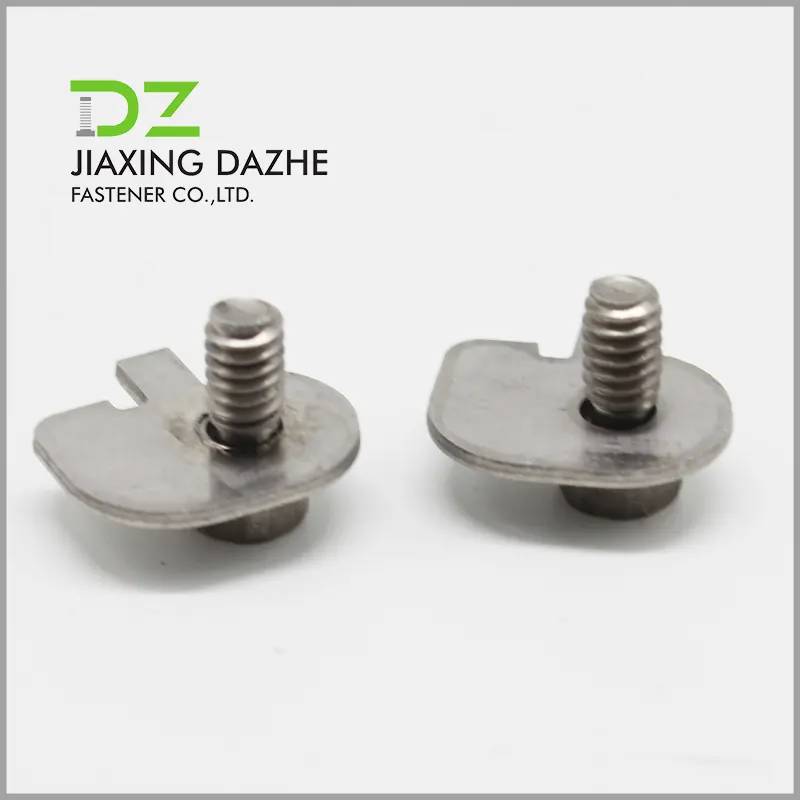
Table of Contents
- 1. Core Structural Features of Hex Flange Head Fastener
- 2. Main Raw Material Options and Surface Treatment Solutions
- 3. Functional Advantages During Assembly Operations
- 4. Typical Working Environments and Industry Deployment
- 5. Comparative Reference With Other Machine Screw Variants
- 6. Standard Installation Guidelines and Quality Control Points
- 7. Frequently Asked Questions About Flange Head Machine Screws
- 8. Find Professional Custom Fastener Support
1. Core Structural Features of Hex Flange Head Fastener
Standard machine screws adopt independent head structures, which often need matched flat washers or spring washers to increase contact area. The integrated flange design changes the traditional assembly logic and forms a continuous pressing surface directly below the hexagonal drive head. Each structural segment has clear functional positioning that works together to maintain clamping force under dynamic load conditions.
Key Component Breakdown
- Hexagonal drive head: compatible with standard hex socket tools, delivers uniform torque distribution without surface slippage during tightening.
- Integrated flange: extends outward radially, enlarges contact area to reduce surface pressure on connected substrates.
- Continuous thread shank: metric or unified thread specifications match pre-tapped holes in metal components.
- Head-shank transition zone: optimized transition curve to eliminate stress concentration under repeated vibration.
Manufacturing precision determines overall usability. Tolerance control on flange flatness and thread pitch ensures consistent clamping effect across batch production. Many low-grade alternatives have uneven flange surfaces, which create local stress points and gradually loosen after long-term vibration exposure. Engineers should verify dimensional tolerances according to international fastener standards before finalizing component drawings.
When designing connection structures, designers can simplify part lists because additional washer components are no longer essential. Simplified part lists reduce management workload in production workshops and lower risks of missing auxiliary accessories during manual or automated assembly workflows.
2. Main Raw Material Options and Surface Treatment Solutions
Material choice depends on ambient humidity, chemical exposure, temperature range and substrate material. Each material grade brings distinct mechanical property limits and anti-corrosion performance, which should be matched with service environment parameters at the initial design phase.
| Base Material Grade | Primary Mechanical Traits | Recommended Surface Treatment | Suitable Operating Conditions |
|---|---|---|---|
| Carbon Steel | High tensile strength, good formability | Zinc plating, black oxide | Indoor dry assembly, low corrosion risk |
| Stainless Steel 304 | Moderate strength, excellent general corrosion resistance | Passivation | Humid environment, light salt mist exposure |
| Stainless Steel 316 | Enhanced chloride resistance, stable at moderate temperature | Electropolishing, passivation | Coastal locations, marine auxiliary equipment |
| Alloy Steel | High yield strength, strong fatigue resistance | Heat treatment plus zinc flake coating | High load dynamic mechanical assemblies |
Surface Coating Selection Principles
Coating layers serve two primary purposes: isolate metal substrate from corrosive medium and prevent galvanic corrosion when connecting dissimilar metals. Coating thickness needs proper control; overly thick layers may interfere with thread engagement and affect final torque accuracy.
Thermal treatment procedures are equally important for carbon and alloy steel variants. Quenching and tempering processes stabilize internal material structure and improve resistance against plastic deformation under sustained clamping pressure. Untreated fasteners will experience permanent deformation once load exceeds elastic limit, leading to permanent loss of preload force.
3. Functional Advantages During Assembly Operations
Assembly efficiency and connection reliability are two core evaluation indicators for industrial fasteners. The structural innovation built into this fastener brings multiple practical benefits compared with conventional machine screw combinations.
- Reduced component quantity: integrated flange removes separate washer installation steps on every connection point.
- Uniform pressure distribution: the full circular flange avoids localized indentation on soft metal or composite material surfaces.
- Improved anti-loosening performance: larger contact surface increases friction resistance against rotational loosening caused by vibration.
- Streamlined automated assembly: feeding systems handle single fastener units more stably than screw-washer combined sets.
- Neater external appearance: continuous flange creates uniform finished surface for exposed equipment housings.
Assembly workshops using automated screwdriving equipment observe obvious improvements in operation continuity. Separate washers often become jammed inside feeding rails, causing frequent equipment pause. Single-piece fastener structures effectively cut down unexpected downtime in continuous production lines.
When assembling thin sheet metal parts, ordinary screws may sink into material surfaces under tightening torque. The wide flange spreads load across a larger area and prevents sheet penetration or permanent surface deformation, protecting the structural integrity of thin-wall components.
Hex Flange Head Machine Screw is often specified for thin plate assembly projects where surface appearance and structural protection are both prioritized by product designers. Engineers frequently select this component for outdoor electronic housing assembly where continuous vibration exists during regular equipment operation cycles.
4. Typical Working Environments and Industry Deployment
Different industrial sectors establish unique requirements for fastener durability, cleanliness and dimensional consistency. Component designers must summarize environmental load characteristics before confirming fastener specifications for formal drawing release.
Primary Industry Application Fields
Automotive auxiliary assemblies: interior support frames, electronic control module housings, cooling system brackets operate under continuous engine vibration. Stable clamping force prevents abnormal noise and avoids connection failure during long-distance operation.
Electronic equipment manufacturing: server chassis, power supply casings and communication equipment shells need compact fasteners that do not require extra washers. Consistent surface quality maintains product aesthetic standards while ensuring electromagnetic shielding assembly tightness.
General mechanical equipment: transmission housing covers, conveyor frame accessories and pump body connection points rely on reliable fastening to sustain stable mechanical operation under cyclic load.
New energy equipment: energy storage cabinet structures and charging device components demand corrosion-resistant fasteners that can withstand variable temperature cycles in outdoor installation locations.
Each industry creates unique test standards to verify fastener service performance. Salt spray testing, vibration cycle testing and thermal cycling testing are commonly adopted screening methods to confirm whether selected fastener types can match expected equipment service lifespans. Test data should be recorded and referenced during specification revision phases.
Operating temperature variation causes thermal expansion and contraction between connected parts. The stable contact surface supplied by the flange helps maintain effective preload across temperature fluctuation ranges, minimizing the possibility of connection gaps developing between assembly interfaces.
5. Comparative Reference With Other Machine Screw Variants
Many fastener types appear similar in outline but deliver different practical performance after installation. Direct comparison clarifies boundary conditions for each variant and helps prevent inappropriate specification selection in detailed design work.
| Fastener Type | Structural Difference | Main Limitations | Best Application Range |
|---|---|---|---|
| Hex socket machine screw without flange | No integrated pressure flange | Must use independent washers; higher risk of surface indentation | Internal assembly space is strictly limited |
| Hex flange head machine screw | One-piece flange and hex head | Larger head outer diameter occupies extra installation space | Accessible assembly positions requiring wide bearing surface |
| Pan head machine screw | Rounded head without flat hexagonal drive | Lower maximum transferable torque, prone to tool slippage | Light load consumer product assembly |
| Flange bolt with coarse thread | Coarse thread for un-tapped through holes | Cannot directly match pre-tapped machine thread holes | Through-bolt joint structures with nuts |
Space layout is one decisive factor during selection. If assembly clearance above the connection point is very narrow, the expanded flange diameter may lead to installation interference. In such cases, designers must switch to conventional hex socket screws plus matched washer sets after spatial verification.
Torque transmission capacity creates another clear dividing line. Hexagonal internal drive structures withstand higher tightening torque compared with cross recess or slotted heads, making them suitable for connections requiring accurately controlled preload values. Hex Flange Head Machine Screw provides reliable torque transmission combined with integral pressure flange, forming a balanced solution for medium and heavy-duty tapped hole assembly work.
6. Standard Installation Guidelines and Quality Control Points
High-quality fastener products cannot achieve expected performance without standardized installation procedures. Improper tightening operations create hidden risks that gradually emerge after equipment enters long-term service.
- Thread hole preparation: tapping debris must be fully cleared before installation to avoid foreign matter jamming threads and creating false torque readings.
- Torque tool calibration: regularly verify torque screwdriver accuracy to prevent insufficient clamping force or thread over-tightening damage.
- Surface cleaning: remove oil, dust and oxidation layers from contact surfaces to maintain stable friction coefficient during tightening.
- Thread lubrication management: lubricant changes friction characteristics; adjustment of target torque value is required if lubricant is applied.
- Visual inspection after tightening: check flange full contact with substrate, no visible tilting or gap between flange and mating surface.
Common Installation Defects and Consequences
Excessive torque causes thread stripping or permanent compression deformation on connected components. Insufficient torque allows relative movement between mating surfaces under vibration, accelerating wear and loosening. Skewed fastener placement creates unilateral stress concentration and reduces overall connection service life significantly.
Quality control protocols should cover incoming material inspection, in-process assembly monitoring and finished product sampling verification. Key inspection items include thread integrity, flange flatness, surface coating completeness and dimensional conformity with specified drawing requirements. Any batch showing consistent dimensional deviation should be isolated and re-evaluated before use on production lines.
7. Frequently Asked Questions About Flange Head Machine Screws
Direct replacement is not universally applicable. Check vertical installation space first. If the maximum outer diameter of the flange exceeds available clearance, traditional screw plus washer configurations remain necessary. The integrated design works best when horizontal surface space allows full contact of the flange face.
The flange improves friction resistance but cannot eliminate loosening risks under extreme cyclic vibration. Designers may consider thread locker for safety-critical connections according to equipment risk assessment standards. Material compatibility between adhesive and fastener surface coating needs prior testing.
Most professional fastener manufacturers support non-standard length customization within reasonable production ranges. Technical drawings including thread standard, material grade and surface treatment must be provided for formal quotation and production planning. Minimum order volume terms apply to many custom specification orders.
Material mechanical properties differ greatly. Stainless steel has lower yield point compared to high-strength carbon steel. Separate torque reference values must be adopted to avoid thread deformation during tightening operations. Never share torque standards across different material grades.
8. Find Professional Custom Fastener Support
Precision fastener development relies on stable manufacturing capacity and strict quality inspection workflows. Technical teams need suppliers capable of adjusting dimensions, materials and surface treatments to match unique assembly requirements of different equipment designs. Early technical communication helps avoid design revisions after prototype production starts.
JIAXING DAZHE FASTENER CO.,LTD. maintains standardized production lines for various machine screw series and supports technical drawing evaluation for new mechanical assembly projects. Engineering teams provide parameter suggestions covering material selection, surface treatment and installation reference conditions according to detailed working environment descriptions submitted by designers.
Share your mechanical assembly requirements and specification demands with experienced fastener engineers.
contact us